Stop guessing
at 147 yards.
Live distances, shots tracked without pressing anything, and a map of the whole round waiting for you afterwards.
First 30 days free, then $50/month · cancel or pause anytime
Start your 30-day trial on the web with no card. Use the same account in the iPhone and Android apps. The trial ends without a charge; continue only if you choose a paid membership.
Live distances
Distance to the green and to the hazards, updating as you walk. The number you need before anyone’s finished pacing off a sprinkler head.
Tap to measure
Tap anywhere on the hole and get the number — the carry over the bunker, the layup short of the creek, the back edge. Anything you can see, and plenty you can’t.
Shots track themselves
Captured by GPS from your phone or your watch, with swings detected automatically on Apple Watch. No sensors to buy, no button before every shot.
The tracking nobody keeps up with
Every shot-tracking system dies the same way: it asks you to do something before you swing. Tag the club, press the button, confirm the shot. By the seventh hole you’ve stopped, and the data has a hole in it that makes the rest useless.
So this one doesn’t ask. Your watch notices the swing, the position gets captured, and you sort out which club was which afterwards — in bulk, sitting down, with a drink, rather than in the middle of the fairway while three people wait.
- Automatic swing detection on Apple Watch
- GPS capture from the phone in your pocket
- Bulk club assignment after the round, not during it
- Or skip it entirely and photograph the scorecard — the parser reads it
First 30 days free, then $50/month · cancel or pause anytime
Start your 30-day trial on the web with no card. Use the same account in the iPhone and Android apps. The trial ends without a charge; continue only if you choose a paid membership.
You own a rangefinder and you’re still guessing
Not about the yardage — about the club. A rangefinder tells you it’s 163. It has no opinion about whether your 7-iron goes 163, and the number in your head is almost certainly the best one you ever hit, on a downhill lie, in August, with the wind helping.
What you say
“My 7-iron’s 165.”
What that was
One shot, two years ago, downwind.
What the round says
Measured, from shots you actually hit.
Once shots are being tracked, your real numbers come out of your own golf. That single change — playing the club that actually covers the flag — quietly wins more holes than any swing tip in the cart.
The part they don’t expect
Every other app in the cart stops when the round does. This one starts.
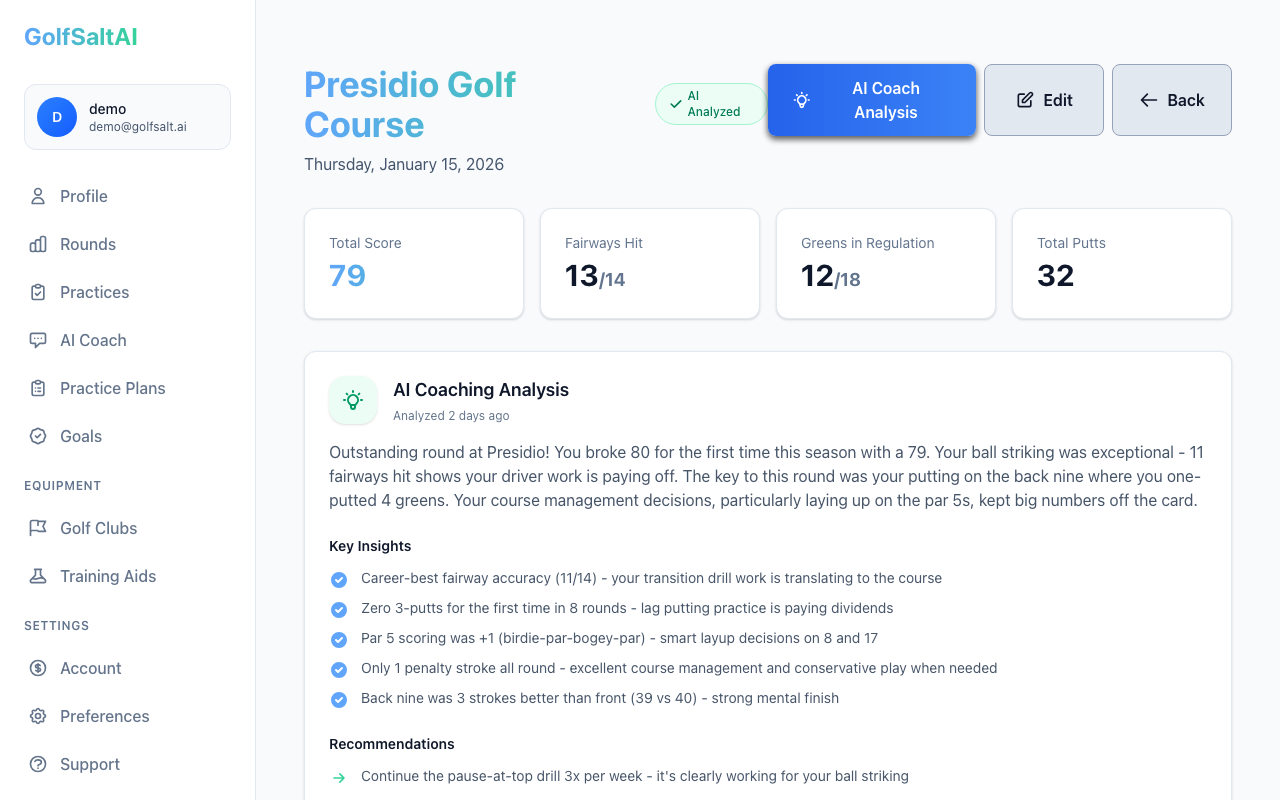
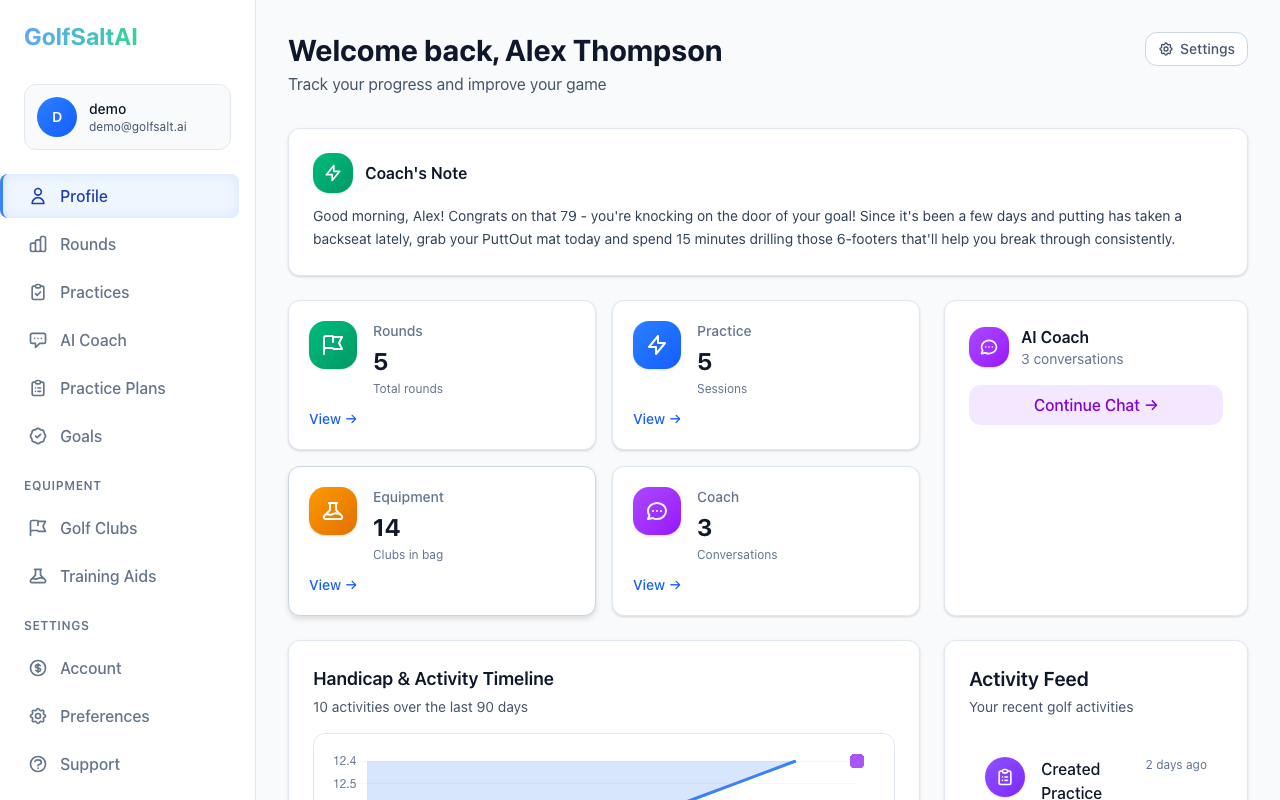
All that tracking was never really about the map. It’s the raw material for an analysis: where the strokes actually went, which holes cost you the same way every week, and what to do about it before next Saturday.
Then your practice plan updates from that analysis, so the forty minutes you spend at the range on Thursday is aimed at the thing that’s actually costing you, rather than whatever felt worst on 18.
You came for the tool. The coaching is what makes the difference stick — and it’s the part that’s still working in September.
The eternal Saturday conversation, as posted:
Paired with a guy today who was absolutely killing it and raving about his 7-wood. Talk me off the ledge.
A golfer on MyGolfSpy
The Saturday game is having a moment
League golf is one of the fastest-growing formats in the sport.
+68%
growth in league golfers since 2019
NGF, 2026
2x
rounds played versus non-league golfers
NGF, 2026
>75%
of core golfers already use a golf app
NGF, 2025
The fair questions
“I don't need a coach. I need to beat Dave.”
Then start with the on-course tools — the distances and the tracking stand on their own. The coaching is the part that means you're still beating him in September.
“I already have a rangefinder.”
Keep it. It's better than GPS for a precise number to something you can see. What it can't do is tell you what your clubs actually carry, or read your last ten rounds and tell you which hole keeps taking a stroke off you.
“Is this going to slow down our round?”
It shouldn't. The watch captures swings without you doing anything, club assignment happens after, and a photo of the scorecard is a legitimate way to log the whole thing.
Common questions
Straight answers about distances, tracking and what happens after.
What's the best way to know my exact yardage on a golf course?
A rangefinder gives you a precise number to something you can see. GPS gives you front, middle and back of the green plus carries you can't see over a hill, without you having to range every target. GolfSalt's map does the GPS half: live distance to the green, hazard distances, and tap-to-measure to any point on the hole so you can check a layup or a carry in a couple of seconds.
Can I track my golf shots automatically without club sensors?
Yes. GolfSalt captures shots by GPS from your phone or Apple Watch, and the watch detects swings automatically, so there's no tagging every club and no button to press before each shot. You assign clubs afterwards in bulk rather than in the middle of the fairway with people waiting.
Do I really know how far I hit each club?
Probably not, and almost nobody does — most golfers quote their best-ever number rather than their average, which is why so many approach shots finish short. The fix is measurement rather than opinion: once your shots are being tracked on the course, your real carry numbers come out of shots you actually hit, and club selection stops being a guess.
What's the difference between a golf GPS app and GolfSalt?
A GPS app ends when the round ends. GolfSalt uses the same round as input to coaching: the shots and scorecard become an analysis of where your strokes actually went, and that analysis rewrites your practice plan. The on-course tools are the part you notice first; the coaching is the part that changes your scores.
Does GolfSalt work on Apple Watch?
Yes — the watch detects swings automatically and syncs them across, so you can capture a round without taking your phone out on every shot. Anything captured during the round is available afterwards for club assignment and review.
Not quite you?
There's a page for the golfer you actually are.
Try it on Saturday
Distances and tracking from the first tee. The analysis is waiting when you get in.
Starts with 30 days free
Start your 30-day trial on the web with no card. Use the same account in the iPhone and Android apps. The trial ends without a charge; continue only if you choose a paid membership.
© 2026 GolfSaltAI. Comprehensive golf coaching.
