Same score again?
Stuck at the same number
for two seasons?
Meet your coach. Start with your goals, your trouble shots, and the practice time you have. Build a first plan from that context, then refine it as you play.
30 days free. No card. $50/month only if you choose to continue.
Start your 30-day coaching trial
Create an account, verify your email, then meet your coach. No card or checkout.
No trial-specific feature caps. Normal account usage protections apply. The trial ends without a charge.
Already a member? Sign in.
Start your 30-day trial on the web with no card. Use the same account in the iPhone and Android apps. The trial ends without a charge; continue only if you choose a paid membership.
See pricing & detailsYou know the shape of it
A plateau isn’t one problem. It’s three, and they feed each other.
The easy strokes are gone
Getting from 26 to 16 was about contact and disasters. Those are fixed. What’s left is thinner, spread across approach distances, scrambling, and decisions — and none of it announces itself.
No single tip is going to find it.
The advice carousel
A video in March. A playing partner’s tip in May. A lesson in July that felt great and faded by August. Each one overwrites the last, so nothing gets a fair trial and nothing accumulates.
Change without a control group isn’t change.
High ceiling, low floor
A 78 and a 94 in the same month. The good round says you have it; the bad one says you don’t. Averaging them tells you nothing, and your handicap keeps sitting in the same place.
The volatility is the diagnosis.
The next lever isn’t a tip. It’s a record.
You can’t find a pattern you never wrote down. Three things do the work here, and they run as a loop.
The scorecard says 88. The analysis says where it went.
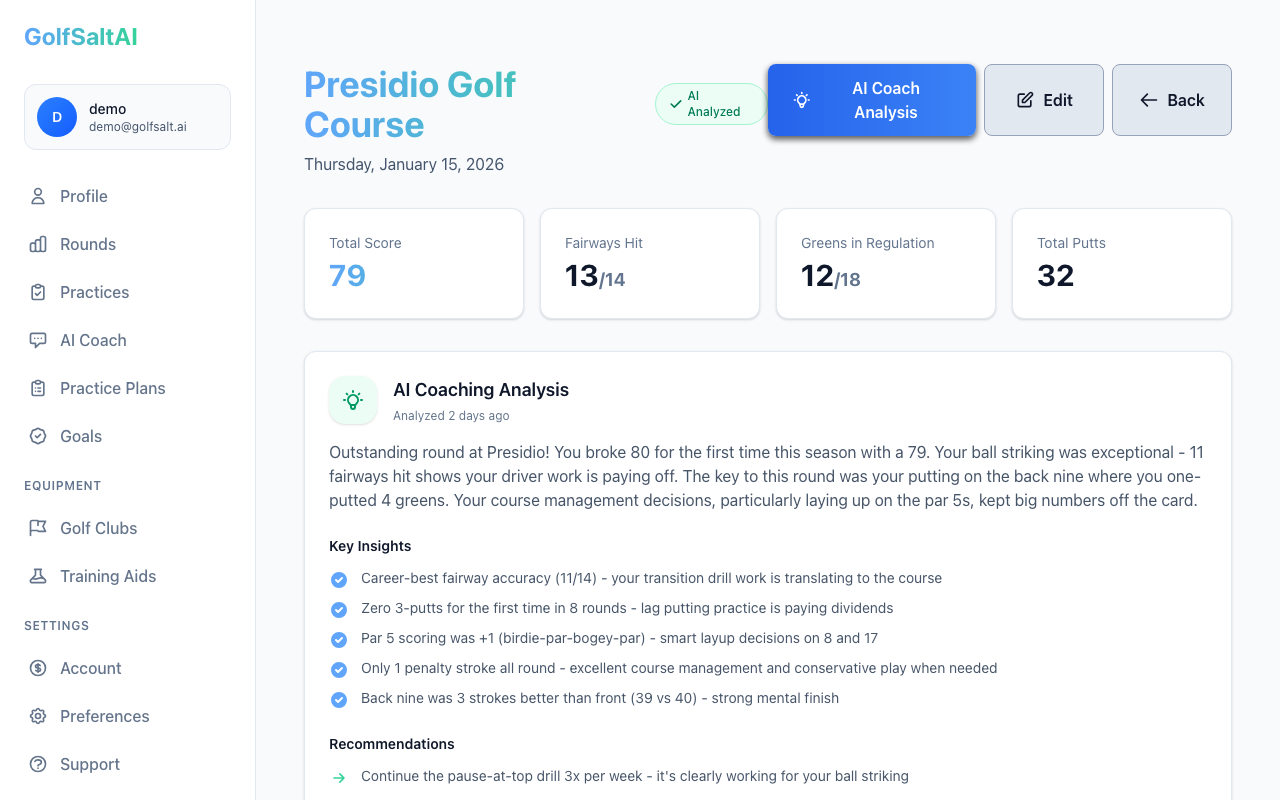
Log the round hole by hole and your coach writes back a read of it: which holes cost you, which of those were actually avoidable, and what the round has in common with the last four.
It won’t tell you the three-putt on 14 was the problem if the real damage was the six approach shots you left short all day. That distinction is the entire difference between a tracker and a coach.
What that reads like
Not the putter. You took 33 putts, which is close to your season average. Nine of them were first putts from off the green after a missed approach — the putting number is downstream of something else.
The pattern. Across your last five rounds, approach shots from 110–140 yards finish short far more often than long. That’s a distance-control problem, and it has been there since your last three rounds in September too.
What changes on Thursday. Your plan now leads with a wedge ladder at three specific numbers instead of the bunker work you had queued, because the bunker shots weren’t costing you anything.
Illustrative example. Your analysis is written from your own rounds, and reads differently.
First 30 days free, then $50/month · cancel or pause anytime
Start your 30-day trial on the web with no card. Use the same account in the iPhone and Android apps. The trial ends without a charge; continue only if you choose a paid membership.
A coach that remembers what you worked on in April
Your coach keeps a working assessment of your game, the hypotheses it’s testing, and what it has already learned about you. It carries across seasons, not sessions.
April
You told it the miss was a pull-hook with the driver and you’d strengthened your grip to fight it. It logged the change and started watching tee-shot outcomes.
June
Fairways improved. Approach proximity got worse. It flagged the trade — the same grip change that straightened the driver was shutting the face on your irons.
September
When you asked why your 7-iron felt off, it didn’t start from zero. It started from April, and told you what it had been watching for five months.
No human coach seeing you every few weeks holds that thread. It isn’t a failing on their part — it’s a structural limit of an hour a month.
The plan changes because the analysis changed
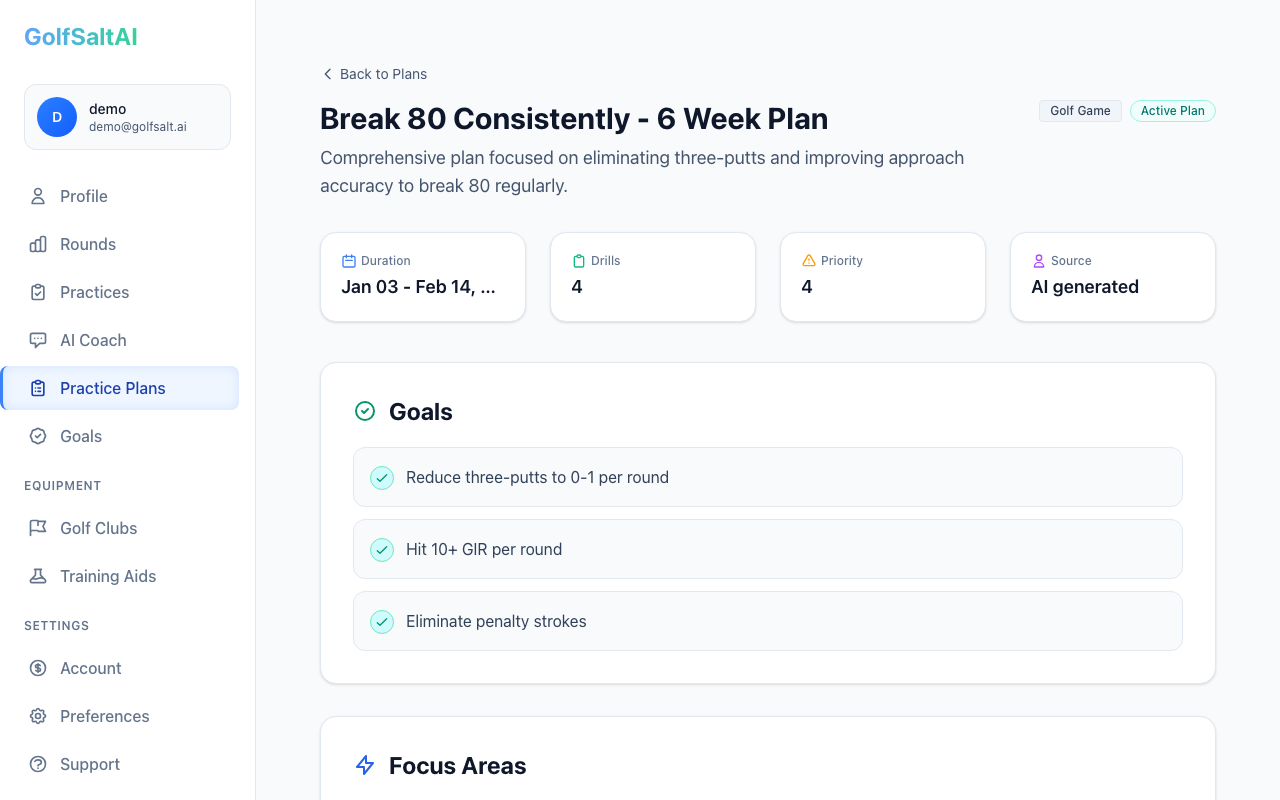
This is the part that actually breaks a plateau: practice that answers to evidence, and evidence that gets refreshed every time you play.
Play
Log the round hole by hole, or upload a photo of the scorecard and let it read it.
Understand
Get the analysis — what cost you strokes, and how this round fits the last ten.
Practice
Your plan updates from that analysis. Every drill carries the reason it's there.
Check
Log the session. Next round tells your coach whether the work actually transferred.
From a thread about hitting a wall — the pattern we heard most often:
I went from around 26 to around 16. After that, I just can't seem to find the next key.
A mid-handicap golfer on TheSandTrap
You are not an edge case
This is the middle of the sport, and it's where improvement most often stops.
14.0
average male Handicap Index
USGA, 2025
3.68M
US golfers carrying a Handicap Index
USGA, 2025
~13M
core golfers, driving 90%+ of golf spend
NGF, 2024
The fair questions
“I've tried apps. They just track.”
Tracking tells you what happened. Analysis tells you why, and the practice plan changes because of it. If a round doesn't change what you're being asked to practice, it was a tracker.
“How is this different from YouTube?”
YouTube doesn't know your misses, your bag, or what you worked on in April. It also can't tell you that the tip you're watching is aimed at a problem you don't have.
“Do I have to log every single round?”
No, but the coaching is only as good as the record. A scorecard photo takes seconds and the parser reads the common formats, which is usually enough to keep the thread alive.
What we won’t tell you
We won’t promise you a number. Nobody honest can, and a plateau that took two seasons to build doesn’t come apart on a schedule.
We won’t pretend to see your swing. A professional standing next to you sees things an analysis of your record cannot. If you already work with one, this sits alongside them — and you can give them access to what your coach sees.
And it gets better the more you give it. One round a month with no practice logged is a thin record, and thin records get careful, hedged coaching. That’s the honest trade.
Common questions
Straight answers about what happens when improvement stalls.
Why did my golf improvement stop?
The changes that took you from a 26 to a 16 are usually big and obvious: contact, a reliable tee shot, fewer disasters. Once those are fixed, the strokes left are spread thin across approach distances, short game, and decision-making, and no single swing tip finds them. That is why the next stretch feels different — it is a different problem, and it needs measurement rather than another tip. GolfSalt analyzes each round to locate where the strokes actually went.
How is GolfSalt different from a golf app that tracks my scores?
A tracker records what happened. GolfSalt explains why it happened and changes what you do next. After a round it writes an analysis of where strokes were gained and lost, carries what it learned into your history, and updates your practice plan from that analysis instead of handing you a generic drill list.
What should I practice when I've plateaued?
Whatever your own rounds say is costing you the most, which is rarely the thing that feels worst. GolfSalt builds a practice plan from your logged rounds and practice sessions, with a reason attached to every drill, and rewrites it after new rounds come in.
Can an AI golf coach really tell me what's wrong with my game?
It can tell you where your strokes are going and what has changed over time, because that is a question about your record. It cannot watch your swing in person the way a PGA professional can. We are direct about that line — many golfers use both, and you can give your own coach access to what GolfSalt sees.
How many rounds does GolfSalt need before it's useful?
The first round gets you an analysis. Patterns — the ones that break a plateau — need several rounds and some practice logged alongside them, because that is what a pattern is. The product is honest about this: what you get out depends on what you put in.
Not quite you?
There's a page for the golfer you actually are.
Reading for golfers stuck at the same handicap
What is actually costing you strokes is rarely what you are practising.

Golf Swing Tempo: An Honest Guide to Finding, Training and Keeping Yours
Good tempo isn't a slow swing. It's a ratio you can repeat. What 3:1 really means, why your short game runs on a different clock, what a couple of drinks does to your rhythm, and how badly fit clubs quietly push your tempo around.
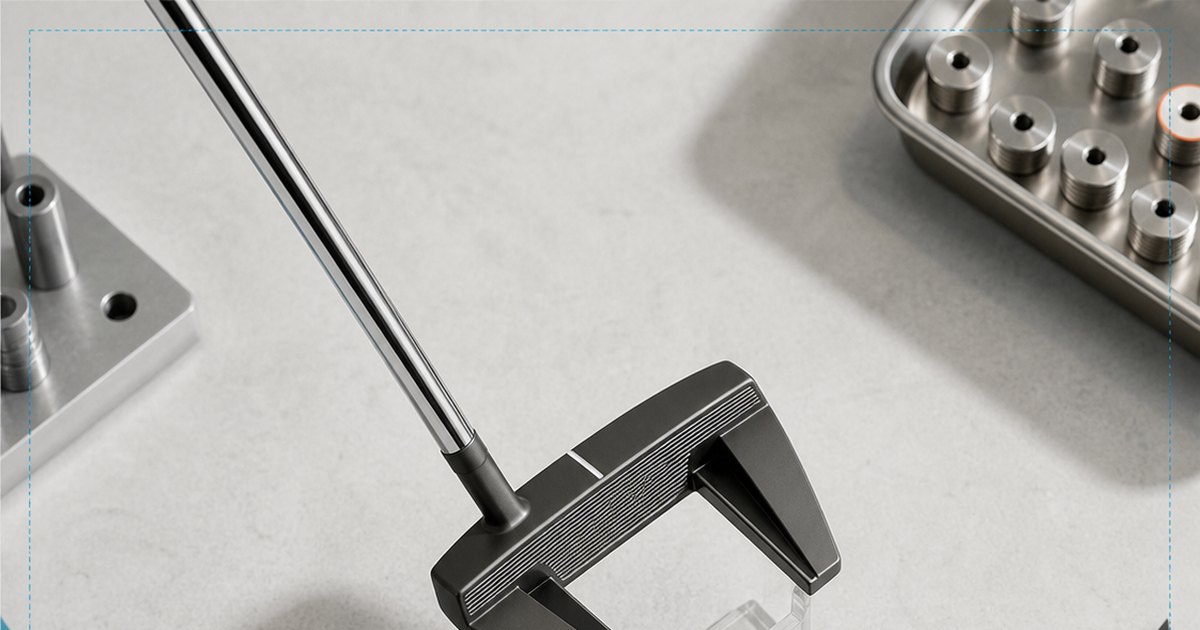
Zero Torque vs Face-Balanced Putters: What Actually Changes, and Who It Helps
Zero torque putters keep the face from twisting during the stroke — but they are not magic, and they are not for every stroke. What actually changes, how zero offset differs, who benefits, and how to find out before you buy.
How to Choose Golf Grips: Size, Taper, Material, and Weight
Choose a starting grip size, understand standard versus reduced taper, account for grip weight, and know when wear calls for replacement. Test one club before committing to the full set.
Find out where the strokes actually go
Log one round and read the analysis. That's the whole pitch — the rest follows from it.
Starts with 30 days free
Start your 30-day trial on the web with no card. Use the same account in the iPhone and Android apps. The trial ends without a charge; continue only if you choose a paid membership.
© 2026 GolfSaltAI. Comprehensive golf coaching.
